
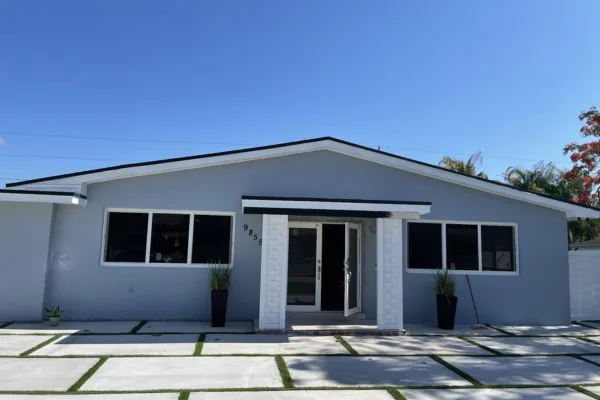
Do You Need a Permit for Impact Doors in Florida?
You picked out the doors. You found a contractor. Now someone mentions permits, and the whole timeline feels like it just got longer. So do you need a permit for impact doors in Florida, or can you skip that step and get straight to installation?
Yes. Florida Building Code §105.1 requires a building permit for any exterior door replacement, including impact-rated entry doors, sliding glass doors, French doors, bi-fold doors, and garage doors. The permit ensures that the installation meets applicable code requirements, uses approved products, and passes inspection by the local building department.
Skipping the permit is not a shortcut. It is a gamble that can affect your insurance documentation, your ability to sell the home, and your protection during the next hurricane.
At G&R Windows, Doors & Roofing, we handle all permitting for every impact resistant door project we install across Miami-Dade, Broward, and Palm Beach counties. You never chase the building department yourself.
In this blog, we will cover which doors need permits, what the process looks like, how much it costs, and what happens when homeowners or contractors try to skip it.
Which Impact Doors Require a Permit in Florida?
The short answer: all of them, if you are replacing the full door.
Entry doors. Your front door, side entry door, or any exterior door leading into the home. Replacing one with an impact-rated unit requires a permit.
Sliding glass doors. These are often the largest glass opening in a Florida home. Replacing a standard slider with an impact sliding glass door is a permitted project in every Florida municipality.
French doors. Double doors with glass panels that open outward or inward. Same rule applies. Full replacement requires a permit.
Bi-fold doors. Multi-panel folding doors that stack to one side. These are becoming more popular in South Florida homes, and they absolutely require permits due to their size and structural requirements.
Garage doors. Your garage door is the single largest opening on most homes. Replacing it with an impact-rated unit is a permitted project, and inspectors pay close attention to garage door installations because a failure here during a storm can compromise the entire structure.
One distinction matters. Minor repairs, like swapping hardware, adjusting hinges, replacing weatherstripping, or fixing a lock, typically do not require a permit. But the moment you remove the full door unit and replace it with a new one, the permit requirement kicks in.
When in doubt, ask your local building department before work begins. Not after.
Why Florida Requires Permits for Impact Door Installation
This is not red tape for the sake of red tape. There is a reason Florida treats exterior doors differently from interior renovations.
An exterior door is a structural opening. During a hurricane, it faces direct wind pressure, flying debris, and driving rain. If a door fails, wind enters the home. Internal pressure builds rapidly. That pressure pushes outward against the walls and upward against the roof. A single door failure can trigger a chain reaction that damages the entire structure.
The permit process exists to prevent that.
When a permit is issued, three things happen. First, the building department confirms that the products specified on the application carry the correct approvals for your location. Second, a licensed contractor installs the door according to manufacturer specifications and code requirements. Third, a building inspector visits the site to verify that the installation matches what was approved.
That inspector checks things you would never think to look for. Threshold waterproofing. Anchor spacing. Sill pan drainage. Structural header adequacy. Hardware ratings. Product approval labels matching the permit application. These details determine whether your door holds during a Category 3 storm or becomes the point of failure.
The permit is your proof that someone independent verified the work. Not the contractor grading their own homework. A third party.
The Impact Door Permit Process: Step by Step
The process is straightforward when your contractor knows what they are doing.
Step 1: Permit application. Your contractor submits an application to the local building department. The application includes project details, product approval documentation (Florida Product Approval number or Miami-Dade NOA where applicable), contractor license information, and a description of the work scope.
Step 2: Building department review. The department reviews the application to confirm the products meet code and the contractor is properly licensed. Review typically takes 5 to 15 business days depending on the municipality and workload.
Step 3: Permit approval and posting. Once approved, the permit is issued. It must be posted at the job site before work begins. This is a legal requirement, not a suggestion.
Step 4: Installation. The contractor installs the impact doors according to the manufacturer's installation instructions and the approved permit documents.
Step 5: Inspection. After installation, a building inspector visits the site. They verify that the installed products match the permit, check installation details (anchoring, waterproofing, hardware, structural connections), and confirm code compliance.
Step 6: Permit close-out. Once the inspection passes, the permit is closed. This creates a permanent record with the building department showing that the work was completed, inspected, and approved.
Six steps. Your contractor handles all of them. You should not have to visit the building department, fill out forms, or schedule inspections yourself.
Who Pulls the Permit, You or the Contractor?
In most professional installations, the licensed contractor pulls the permit. That is the standard, and it is what you should expect.
Florida law does allow homeowners to pull their own permits as owner-builders on their primary residence. But owner-builders take on full responsibility for code compliance, inspection scheduling, product documentation, and liability. If something goes wrong, the homeowner is accountable. Not the contractor.
Here is a practical rule. If a contractor asks you to pull the permit yourself, treat that as a red flag. It often means the contractor is unlicensed, wants to avoid accountability, or is trying to cut corners on the project. A legitimate licensed contractor handles permitting as a standard part of the job.
How Much Does an Impact Door Permit Cost in Florida?
Permit fees vary by municipality, project scope, and number of openings. There is no single statewide fee.
General range: $150 to $600 for a residential impact door project. Some municipalities charge per opening. Others charge a flat project fee based on the estimated value of the work.
Miami-Dade County permit fees tend to run higher than Palm Beach County for similar project scopes. Broward County falls somewhere in between.
For a single entry door replacement, the permit fee might be $150 to $250. For a full-home door replacement project covering multiple openings (entry, sliding glass, garage), the fee can reach $400 to $600.
We include permit handling in every project. The cost is part of our quote, listed as a separate line item so you see exactly what you are paying. No hidden fees. No surprise charges after the contract is signed.
HVHZ Requirements: Miami-Dade and Broward Impact Door Permits
If your home is in Miami-Dade or Broward County, the permit process has an extra layer.
Both counties sit inside the High Velocity Hurricane Zone (HVHZ). Products installed in HVHZ must be approved for that specific application. Depending on the product, compliance may be documented through a Miami-Dade Notice of Acceptance (NOA) or an applicable Florida Product Approval that specifically covers HVHZ use.
What does this mean in practice? The building department reviewer checks that every product on your permit application carries the correct HVHZ approval. If the documentation is missing, incomplete, or does not match the product being installed, the permit application can be rejected or the inspection can fail.
For larger openings like sliding glass impact doors and bi-fold doors, HVHZ permits may also require additional engineering details. These doors span wider openings and create larger structural loads, so the building department wants to confirm that the surrounding wall structure can support the installation.
Homeowners in HVHZ should ask their contractor one specific question before signing: "Do the products on this quote carry the correct HVHZ approval for my address?" If the contractor cannot answer clearly, keep looking.
What Happens If You Install Impact Doors Without a Permit?
Nothing good.
The consequences rarely show up on installation day. They show up later, when you least expect them.
Failed future inspections. If the building department discovers unpermitted work during a later project (a roof replacement, a window upgrade, a home addition), they can require you to retroactively permit and inspect the door work. That means paying for a permit after the fact, potentially opening up finished walls for inspection access, and correcting anything that does not meet code.
Resale complications. Title companies and buyers check permit records. Unpermitted work can delay or kill a sale. Some buyers walk away entirely. Others use it as leverage to negotiate the price down by thousands.
Fines. Some municipalities impose fines for unpermitted construction work. The amount varies, but it is always more than the permit would have cost in the first place.
Contractor warranty issues. If a contractor installed your doors without a permit, their warranty may not hold up. And if the contractor was unlicensed, good luck reaching them when a problem appears two years later.
The permit costs a few hundred dollars. The problems from skipping it cost thousands.
How Unpermitted Work Can Affect Your Insurance
This is the one most homeowners miss entirely.
When you schedule a wind mitigation inspection, the inspector documents the opening protection on your home using the OIR-B1-1802 form. For impact doors to count toward your opening protection credit, the inspector needs to verify that the products are properly rated and installed.
If the doors were installed without permits, the inspector may not be able to verify the installation details. Missing permit records, missing product approval documentation, or evidence of non-code-compliant installation can prevent the inspector from awarding the opening protection credit.
That lost credit can mean higher insurance premiums for years. We covered the full insurance connection in our guide on how impact doors can lower home insurance in Florida.
Impact Door Permits vs Impact Window Permits vs Roof Permits
If you are upgrading multiple parts of your home at the same time, here is a quick comparison of how permits work across the three major project types.
The process is similar across all three. Application, review, installation, inspection, close-out. But each has product-specific documentation requirements. Doors require threshold and sill waterproofing verification that windows do not. Roofs involve different inspection stages for deck attachment and underlayment.
If you are planning to upgrade doors, windows, and roofing in one project, one contractor handling all permits saves time and prevents coordination problems. Three separate contractors mean three separate permit applications, three separate inspection schedules, and three separate chances for delays.
We covered the full roof permit process in our guide on roof replacement permits in Florida.
Frequently Asked Questions
Q1. Do you need a permit to replace a front door in Florida?
Answer: Yes, in most cases. Florida Building Code §105.1 requires a permit for exterior door replacements. This applies to front entry doors, side entry doors, and any exterior door being fully replaced. Minor repairs like hardware changes or weatherstripping typically do not require a permit, but a full door replacement does. Always confirm with your local building department before starting work.
Q2. Do garage doors need a permit in Florida?
Answer: Yes. The garage door is the largest exterior opening on most Florida homes. Replacing it, especially with an impact-rated unit, requires a permit and inspection. In Miami-Dade and Broward counties, the product must carry the appropriate HVHZ approval. A non-rated or improperly installed garage door is one of the most common points of failure during a hurricane.
Q3. How long does it take to get an impact door permit in Florida?
Answer: Permit review typically takes 5 to 15 business days depending on the municipality, project scope, and building department workload. HVHZ projects in Miami-Dade and Broward may take longer due to additional documentation review. Plan for the permit timeline before scheduling your installation date.
Q4. Can I install impact doors myself as a homeowner in Florida?
Answer: Florida law allows homeowners to pull their own permits as owner-builders for work on their primary residence. However, the homeowner assumes full responsibility for code compliance, product documentation, inspection scheduling, and liability. Most homeowners hire a licensed contractor who manages the entire process from application to close-out.
Q5. Does my contractor handle the impact door permit?
Answer: In most professional installations, yes. A licensed contractor submits the permit application, provides product approval documentation, coordinates the inspection, and closes out the permit after installation is complete. If a contractor asks you to pull the permit yourself or suggests skipping it entirely, treat that as a serious warning sign.
Conclusion
Do you need a permit for impact doors in Florida? Yes. Every exterior door replacement, from your front entry to your garage, requires a building permit under Florida law. The permit process protects your investment, ensures code compliance, creates documentation for insurance purposes, and gives you a permanent record that the work was done right.
A permit costs a few hundred dollars. Skipping it can cost thousands in fines, failed inspections, lost insurance credits, and resale headaches.
G&R Windows, Doors & Roofing handles all permitting for every impact door project we install across Miami-Dade, Broward, and Palm Beach counties. We offer a 5-year parts warranty, 3-year labor warranty, and free no-obligation estimates.
Impact Resistant Doors | Schedule a Free Estimate
