
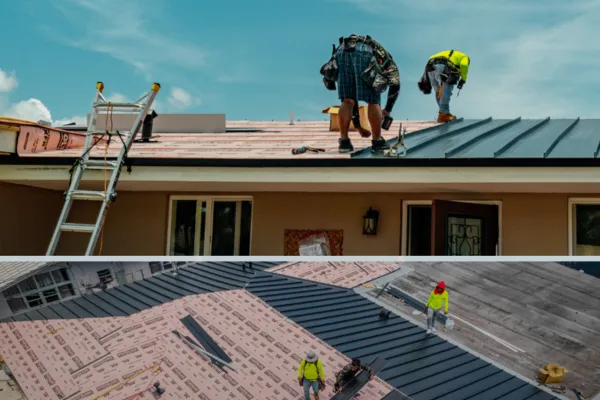
Best Roof Types for Hurricane Protection in Florida
Your roof is the single most important piece of hurricane protection on your home, and in Florida the material you choose makes a real difference in how it holds up. But the honest answer to "what's the best roof type" is not one-size-fits-all.
For hurricane protection in Florida, a standing-seam metal roof is widely considered the best roof type, rated for winds up to 160 to 180 mph thanks to interlocking panels and concealed fasteners with no exposed screws for wind to catch. Concrete or clay tile is a strong second when mechanically fastened, and impact-resistant architectural shingles offer the best value. The right choice depends on your budget, your home's structure, and how long you plan to stay.
At G&R Doors, Windows & Roofing, we install every one of these systems across South Florida, so here is a straight comparison, with real wind ratings and costs, to help you choose. If you already know you need storm-proof roofing in Hialeah, we can walk your specific roof.
Quick takeaways:
Standing-seam metal offers the best wind protection and longest life, at the highest cost
Concrete and clay tile perform well when mechanically fastened, and last for decades
Impact-resistant architectural shingles are the best value and still strong for most homes
3-tab shingles are no longer recommended for Florida's wind zones
How the roof is installed and approved matters as much as the material itself
What Makes a Roof Hurricane-Resistant in Florida?
Before comparing materials, it helps to know what actually protects your home. Four things matter: the wind uplift rating (how hard the wind can pull before the covering lifts), debris resistance (whether flying objects puncture it), the fastening method (how the covering is attached to the deck), and code approval (a valid Florida Building Code product approval or Miami-Dade Product Control NOA).
Two more factors sit underneath the covering: your roof shape, since hip roofs shed wind better than gable roofs, and your underlayment, since a secondary water barrier keeps rain out even if some covering is lost. A great material installed poorly will still fail, which is why the "best" roof is really the best system for your home.
The Best Roof Types for Hurricane Protection, Compared
Standing-Seam Metal: The top performer for hurricanes. Its continuous interlocking panels and concealed fasteners give it the highest wind uplift resistance of any common roof, with no exposed screw heads for wind to peel back. It resists flying debris well, lasts 40 to 70 years, shrugs off salt air, and can cut cooling costs. The trade-off is the highest upfront price, often in the range of $15,000 to $30,000 for a typical Florida home depending on size.
Concrete and Clay Tile: Tile's weight is its strength, making it very hard for wind to lift, and it carries a classic South Florida look with a long lifespan. The critical detail most homeowners miss: tile only earns its 150-plus mph rating when it is mechanically fastened with screws, clips, or wire ties per current code. Older mortar-set tile performs far worse. Tile is also heavy, so your structure has to support it, and individual tiles can crack under heavy debris.
Impact-Resistant Architectural Shingles: The best value for most Florida homes. Modern architectural shingles rated to 130 mph, especially Class 4 impact-resistant models tested under UL 2218, protect well at a fraction of metal or tile cost. They typically last 15 to 25 years in Florida's intense sun, and the impact rating can also earn an insurance discount. Just avoid old 3-tab shingles, which are rated for only 60 to 70 mph and are no longer a smart choice here.
Slate: A premium, niche option. Natural slate is beautiful and can last a century, but it is very heavy and expensive, and like tile it can crack on direct debris impact. It shows up mostly on high-end homes with the structure to carry it.
Which Roof Is Best for Your Florida Home?
If you want the strongest wind protection and the longest life and plan to stay long term, professional metal roof installation is the clear pick. If you love the classic Florida look and want a roof that lasts decades, mechanically fastened tile roof installation is an excellent choice, as long as your home can carry the weight. If budget is the priority but you still want real hurricane performance, impact-resistant shingle roofing gives you the most protection per dollar. And for high-end homes built to carry the weight, slate roof installation delivers the longest life of any option.
There is no wrong answer among these when they are code-approved and properly installed. The best fit comes down to your budget, how long you will own the home, and the look you want.
Why Installation Matters as Much as the Material
Here is the part that separates a roof that survives from one that fails: how it is installed. The same metal panel or tile can pass or fail a storm depending on the fastening, the nailing pattern on the deck, the underlayment, and whether the product carries a valid Florida or Miami-Dade approval for your wind zone.
This is where hiring a licensed, experienced installer pays off. A properly installed mid-tier roof will outperform a premium roof installed poorly. When we quote a roof replacement, we match the material and fastening to your address's wind requirements and pull the right product approvals, so the roof performs the way its rating promises.
Roofing and Your Hurricane Insurance
Your roof is also a major factor in your insurance. Florida's wind mitigation inspection looks at your roof covering, how the deck is attached, your roof shape, and whether you have a secondary water barrier. A newer, code-compliant, well-attached roof can earn meaningful wind mitigation credit, and a longer-lasting material like metal or tile can help with insurability as roofs age. You can see how all of this is scored in our guide to the Florida wind mitigation form.
Frequently Asked Questions
Q1. What is the best roof type for hurricanes in Florida?
Answer: A standing-seam metal roof is generally the best for pure hurricane performance, rated up to 160 to 180 mph with a 40 to 70 year lifespan. Mechanically fastened tile and impact-resistant shingles are also strong choices. The best one for you depends on budget, structure, and how long you will stay.
Q2. Is a metal roof better than tile for hurricanes?
Answer: Metal edges out tile on pure wind performance and debris resistance, and it is lighter. Tile lasts longer and offers the classic South Florida look, and performs very well when mechanically fastened. Both are excellent; metal wins on storm performance, tile on longevity and aesthetics.
Q3. Are shingle roofs good enough for Florida hurricanes?
Answer: Yes, if you choose the right ones. Architectural shingles rated to 130 mph, especially Class 4 impact-resistant models, protect well and meet code. Avoid basic 3-tab shingles, which are rated for only 60 to 70 mph and are no longer recommended for Florida.
Q4. How much does a hurricane-resistant roof cost in Florida?
Answer: Costs vary by size and complexity, but for a typical home, impact-resistant shingles are the most affordable, tile sits in the middle to high range, and standing-seam metal is the highest at roughly $15,000 to $30,000. A quote for your specific roof is the only accurate number.
Q5. Does a new roof lower my insurance?
Answer: It can. A newer, code-compliant roof with strong deck attachment, a good roof shape, and a secondary water barrier can earn wind mitigation credit. Document the upgrade with a wind mitigation inspection to claim it.
The Bottom Line
For maximum hurricane protection in Florida, standing-seam metal leads, tile is a close and longer-lasting second, and impact-resistant shingles deliver the best value. But the real key is a code-approved material installed correctly for your wind zone, because that is what actually holds when a storm hits.
Not sure which roof fits your home and budget? We install metal, tile, and shingle systems built to Florida code across South Florida. Request a free roofing estimate and we will assess your roof, your wind zone, and the best option for your home.
