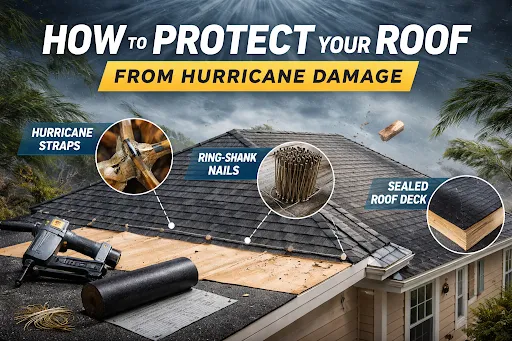
How To Protect Your Roof From Hurricane Damage
How to protect your roof from hurricane damage starts with one simple truth, most roof failures happen because of weak connections and poor preparation, not just strong winds. In hurricane-prone areas like Florida, wind speeds can exceed 120 mph, and even a small opening can let pressure build inside your home and lift the entire roof. The solution is a mix of smart maintenance and structural upgrades like hurricane straps, sealed roof decks, and proper flashing.
Here is a quick snapshot of what actually protects your roof:
Strengthen roof to wall connections with straps or clips
Secure shingles and check for loose or damaged areas
Install a secondary water barrier to prevent leaks
Clean gutters and remove debris before storm season
Inspect soffits and edges where wind damage often starts
According to the Insurance Institute for Business & Home Safety, roof upgrades like sealed decks can reduce water intrusion by up to 95 percent. That means preparation directly impacts how well your home survives a storm.
At G & R Windows, Doors & Roofing, we help homeowners protect their roofs using proven storm-resistant solutions designed for high-wind regions. In this article, we will break down the exact steps, upgrades, and expert tips to protect your roof from hurricane damage and avoid costly repairs.
Why Roofs Fail During Hurricanes And High Winds
Studies show that wind speeds as low as 70 mph can start pulling off poorly secured roofing materials, and by the time the winds exceed 100 mph, a roof can be completely compromised. Understanding why roofs fail in high winds is essential for protecting your home.
What Is Wind Uplift And Internal Pressure
Wind uplift occurs when high winds create low-pressure areas on the top of the roof while higher pressure builds underneath. This pressure difference can force roofing materials, including shingles and tiles, to lift and detach. The stronger the wind, the greater the uplift. According to FEMA, this is why securing a roof’s edges and corners with hurricane straps or clips is critical to maintaining the roof’s integrity.
Role Of Roof To Wall Connection In Storm Damage
One of the most important factors in roof protection is the roof-to-wall connection. This connection ensures the roof is firmly anchored to the home’s structure, preventing the entire roof from being lifted off during high winds. Hurricane straps or hurricane clips play a crucial role in strengthening this connection, making it far less likely that the roof will detach under pressure. Homes in hurricane-prone areas, like those in Florida, should invest in FORTIFIED Roof systems, which include these critical upgrades. Properly securing this connection can greatly increase the roof’s ability to withstand extreme weather.
At G & R Windows, Doors & Roofing, we will guide you through the best ways to protect your roof and prevent hurricane roof damage. From reinforcing connections to securing weak points, these tips will help ensure your roof stands strong during the next storm.
Most Effective Ways to Protect Your Roof Before Hurricane Season
Preparing your roof before hurricane season is crucial to avoid significant damage. Taking proactive steps to strengthen your roof can prevent costly repairs and ensure your home remains safe during severe weather. Here’s what you should do to get your roof hurricane-ready.
Inspect Shingles Flashing And Roof Deck Condition
Start by checking the shingles for any signs of wear, such as curling, cracking, or missing pieces. Also, inspect the flashing around chimneys, vents, and skylights for any gaps or damage. The roof deck should be solid, with no signs of rot or weakness. If any of these components are compromised, replace them promptly.
Clean Gutters And Remove Debris From Roof Surface
Clogged gutters can cause water backup, which could damage your roof and cause leaks. Clean out all gutters and downspouts and ensure they are securely fastened. Also, remove debris such as leaves and branches from the roof surface to prevent moisture buildup and potential damage.
Trim Trees And Secure Loose Outdoor Items
Overhanging branches can cause significant damage during high winds. Trim trees near the roof and remove any loose branches that could break off and fall. Secure outdoor items like patio furniture and decorations to prevent them from becoming projectiles.
Check Soffits Vents And Roof Edges For Weak Spots
The soffits and roof edges are often vulnerable to wind damage. Ensure the soffits are securely attached and the vents are functioning properly. Reinforce roof edges and drip edges to help prevent wind-driven rain from entering your home. By taking these steps, you can help protect your roof from the devastating effects of hurricane winds and ensure your home is ready for the storm season ahead.
Structural Upgrades That Provide Maximum Hurricane Protection
To ensure your roof can withstand hurricane-force winds and minimize storm damage, structural upgrades are essential. These improvements strengthen your roof’s ability to resist the intense strom pressure and wind-borne debris that hurricanes bring. Here are some of the most effective upgrades.
Install Hurricane Straps Or Hurricane Clips For Stronger Connections
Hurricane straps or hurricane clips are critical for securing your roof to the walls of your home. These metal connectors help prevent the roof from lifting off during high winds. By strengthening the roof-to-wall connection, they ensure your home’s structure remains intact under extreme conditions.
Use Ring Shank Nails For Better Roof Attachment
Ring-shank nails are specially designed to provide a stronger hold than standard nails. These nails feature grooves that help grip the wood, preventing them from pulling out during high winds. Using these nails in combination with hurricane straps or clips significantly enhances the attachment of shingles to the roof structure, providing better wind resistance.
Add Sealed Roof Deck And Secondary Water Barrier
A sealed roof deck is an important upgrade that prevents water from entering your home in the event of a storm. Adding a secondary water barrier beneath the shingles provides an extra layer of protection against water intrusion, even if the shingles are damaged. This is especially crucial for preventing leaks during heavy rain.
Reinforce Roof Edges Drip Edge And Starter Strips
Reinforcing roof edges and installing a drip edge can prevent water from seeping under the roof materials, which can lead to rot or leaks. Additionally, starter strips help secure the first row of shingles and prevent wind from lifting them during a storm. Together, these upgrades create a more durable roofing system.
Best Roofing Materials For Hurricane Prone Areas
When selecting a roofing material for hurricane-prone regions, the material’s durability and resilience are key factors in withstanding high winds and wind-borne debris.
Asphalt Shingles Vs Metal Roofing Performance
Asphalt shingles are a popular choice due to their affordability, but they tend to perform poorly in high winds, often tearing off during hurricanes. On the other hand, metal roofing provides superior wind resistance and can withstand extreme weather conditions. It is lightweight, durable, and resists both wind and water damage effectively.
Impact Resistant Shingles And Roofing Systems
For additional protection, impact-resistant shingles are a great option. These shingles are designed to endure the impact of wind-driven debris, reducing the likelihood of damage. Roofing systems that combine these shingles with hurricane straps or impact-rated materials provide excellent overall storm protection.
Choosing Materials For Coastal And High Wind Zones
For homes in coastal areas, metal roofing and concrete tile offer the best performance against saltwater corrosion, while impact-resistant shingles are ideal for durability. It's crucial to choose materials that are specifically rated for high-wind zones to ensure maximum protection.
Roof Protection Tips For Florida And Coastal Homes
Protecting your roof in Florida and other coastal areas requires additional attention due to the frequent and severe storms in these regions. Ensuring that your roof is prepared for hurricane season can save you from costly repairs.
Florida Building Code And Wind Mitigation Requirements
Florida's building codes are designed to ensure homes can withstand extreme weather conditions. These codes require specific roof-to-wall connections, use of hurricane straps, and other structural reinforcements.
Importance of Miami-Dade Approved Roofing Systems
Roofing systems that are Miami-Dade approved have passed rigorous testing and are considered the gold standard for hurricane protection. After reinforcing your roof, a wind mitigation inspection can help you qualify for significant insurance discounts. This inspection verifies that your home is equipped with features that reduce storm damage, such as impact windows and hurricane straps, potentially lowering your premiums.
What to Do Right Before a Hurricane Hits Your Area
When a hurricane is approaching, taking immediate action to protect your home can significantly reduce the risk of roof damage. Before the storm hits, secure all outdoor furniture, decorations, and anything that could become airborne during high winds. This includes trimming trees and removing branches near the roof.
Inspect your roof for any weak points such as loose shingles, flashing, or areas where water could enter. Ensure that drip edges and starter strips are properly installed and secure.
Do not attempt last-minute repairs during a hurricane warning, as it can be unsafe to work on the roof during high winds. If repairs are necessary, wait until conditions improve, or contact a professional for help.
What to Do After Hurricane Damage To Your Roof
After a hurricane, it’s crucial to act quickly to prevent further damage and protect your home from the elements. Here’s what you should do if your roof has been affected.
First, ensure your safety. If possible, carefully inspect your roof from the ground using binoculars or through a window to spot visible damage. Document all damage with photos for insurance purposes. If necessary, call a professional for a thorough inspection once the storm has passed.
If there are visible leaks or missing shingles, cover the affected areas with a tarp or plastic sheeting. This temporary protection will prevent rain from entering the home until permanent repairs can be made.
When to Call A Professional Roofing Contractor
If the damage to your roof is extensive, or involves structural components like the roof deck or rafters, it's crucial to call a professional roofing contractor. A qualified expert will assess the damage, provide an estimate, and perform repairs safely and effectively, ensuring your home stays protected. At G & R Windows, Doors & Roofing, we specialize in hurricane roof protection, offering services like impact-resistant roof installations and stormproofing solutions to keep your home secure during extreme weather. If you suspect significant damage or need professional advice, don’t hesitate to reach out to us.
Repair Vs Replacement: Which Is Better After Storm Damage
Determining whether to repair or replace your roof depends on the extent of the damage and the age of the roof.
When Minor Repairs Are Enough
If the damage is limited to a few shingles or small areas, minor repairs may be enough. These repairs can extend the life of your roof and prevent further issues.
When Full Roof Replacement Is Necessary
If your roof has sustained widespread damage or the structure is compromised, a full roof replacement is the safer option. This is especially true for roofs that are nearing the end of their lifespan.
Long-Term Protection Benefits Of Upgrading Roof Systems
Upgrading to impact-resistant shingles, adding a sealed roof deck, or reinforcing the roof-to-wall connection during replacement can increase the roof’s resilience to future storms, offering better long-term protection.
Final Thoughts
Protecting your roof from hurricane damage requires both preventive maintenance and strategic upgrades. By reinforcing your roof-to-wall connection, securing shingles, and ensuring proper drainage, you can significantly reduce the risk of damage during a storm. Upgrading to impact-resistant shingles and strengthening your roof deck provide added protection and peace of mind. Whether you're in Florida or coastal areas, following these steps can help safeguard your home from the harshest weather conditions.
At G & R Windows, Doors & Roofing, we specialize in helping homeowners in Florida prepare their homes for hurricane season. From impact window installation to hurricane roof protection, our expert team provides the right solutions for your needs. Ready to secure your home? Contact us today to schedule a consultation or request a free quote for roofing and hurricane protection services.
FAQs
Question: How Can Hurricane Proof My Roof?
Answer: To hurricane-proof your roof, reinforce roof-to-wall connections with hurricane straps or clips, secure shingles with ring-shank nails, and install a sealed roof deck to prevent water intrusion. Regular maintenance, like cleaning gutters and trimming trees, also helps.
Question: What Is The Best Roof For Hurricane Areas?
Answer: The best roofing materials for hurricane-prone areas are metal roofs and impact-resistant shingles. Both offer excellent wind resistance and durability, making them ideal for high-wind zones like Florida.
Question: Do Hurricane Straps Really Work?
Answer: Yes, hurricane straps are highly effective at securing your roof to the walls of your home, preventing the roof from being lifted off during high winds. They are a critical part of wind mitigation.
Question: Can I Protect My Roof Without Replacing It?
Answer: Yes, by adding hurricane straps, securing loose shingles, and applying a secondary water barrier, you can strengthen your existing roof without full replacement.
