Is A Metal Roof Better Than Shingles Roof In A Hurricane
Is A Metal Roof Better Than Shingles Roof In A Hurricane? In most severe wind events, a properly installed standing seam metal roof provides stronger wind uplift resistance and better panel retention than standard asphalt shingles. However, the real answer depends on installation quality, fastening systems, and Florida Building Code compliance.
In Hialeah and throughout South Frida, hurricane winds can exceed 120–150 mph. That level of force tests every component of your roofing system. Metal roofs use interlocking panels and concealed fasteners designed to resist blow-off. High-wind rated architectural shingles can perform well too, but they rely heavily on adhesive strips and precise nail placement.
At G&R Windows, Doors & Roofing, we design storm proof roofing systems built specifically for Hialeah Florida conditions. We evaluate wind uplift ratings, sealed roof decks, secondary water barriers, flashing integration, and attic ventilation to strengthen the entire roof structure.
In this guide, you’ll learn the real differences between metal and shingle roofs in hurricanes, what typically fails first during storms, and how to choose the right system for long-term protection and peace of mind.
How Hurricanes Damage Roofs: What Fails First?
After every major storm in Hialeah, we walk through neighborhoods and see the same pattern. One house loses a few shingles. Another loses an entire roof section. The difference is rarely luck. It’s usually about wind uplift resistance, fastening quality, and how the roofing system was built. To truly answer Is A Metal Roof Better Than Shingles Roof In A Hurricane, we need to understand what actually fails first during hurricane conditions.
Wind Uplift and Blow-Off Explained
Hurricanes do not just push down on roofs. They create uplift pressure. As wind flows over the roof surface:
Air pressure drops above the roof
Suction forces pull materials upward
Edges and corners experience the highest stress
Wind-Driven Rain and Water Intrusion
Even if the roof covering stays attached, wind-driven rain can penetrate weak points. Water intrusion typically begins when:
Shingles lift slightly, breaking adhesive seals
Underlayment is exposed after partial blow-off
Flashing integration fails
A sealed roof deck and secondary water barrier significantly reduce interior damage.
Edge Failure, Flashing Weak Points, and Fasteners
Most hurricane roof failures begin at:
Roof edges
Ridge caps
Valleys
Improperly secured flashing
Metal Roof Performance in Hurricanes
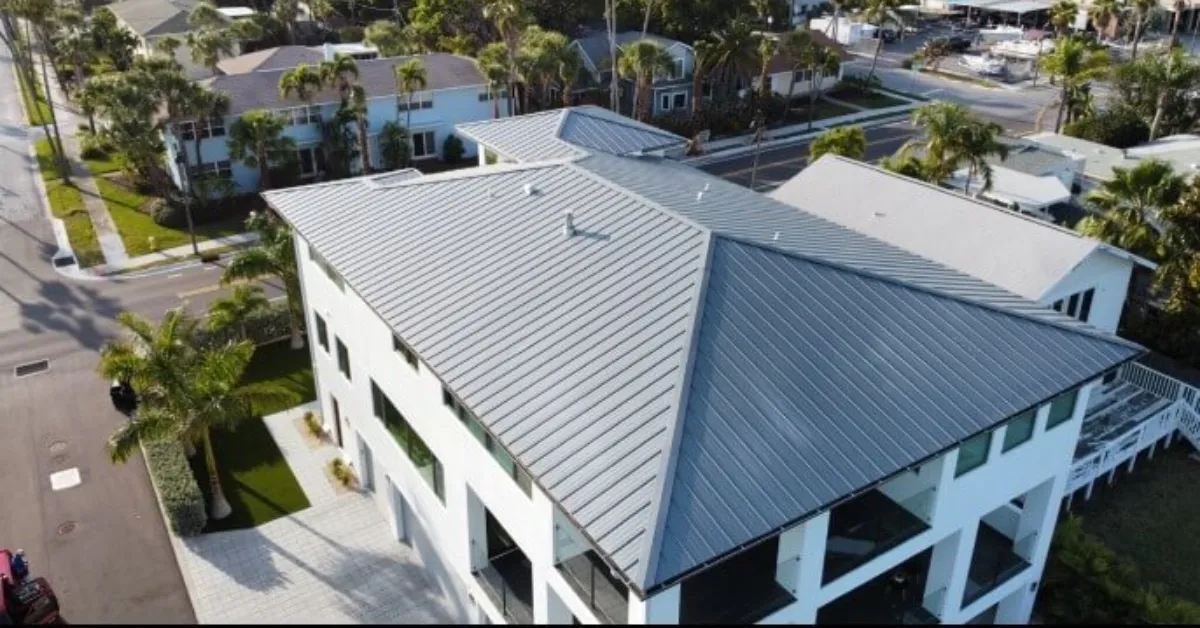
After strong storms pass through Hialeah, Florida, we often notice something consistent. Homes with properly installed standing seam metal roofs usually show less visible damage than many surrounding properties. That observation is not marketing hype. It comes down to engineering, fastening, and system design. Metal roofing often performs strongly in high-wind environments, especially when built to meet Florida Building Code standards.
Standing Seam vs Exposed Fastener Systems
Not all metal roofs behave the same in hurricanes. Standing seam systems:
Use concealed fasteners
Interlocking vertical panels
Allow controlled thermal movement
Reduce direct exposure of screws to wind uplift
Wind Uplift Ratings and Engineering Strength
Metal roofing systems are often engineered for high wind uplift resistance. In hurricane zones like Hialeah, Florida:
Panels are secured with tighter fastening patterns
Clips and fasteners are designed for uplift loads
Roof edge securement is reinforced
Wind uplift pressure is strongest at corners and edges. Proper engineering prevents progressive panel detachment.
Common Failure Points in Metal Roofing
Even metal roofs can fail if improperly installed. Typical weak points include:
Poor edge fastening
Inadequate flashing integration
Incorrect fastener spacing
Improperly sealed roof penetrations
A metal roof is only as strong as its installation quality.
Shingle Roof Performance in Hurricanes
After strong storms hit Hialeah, I often see a mix of results. Some homes lose only a few tabs. Others lose entire sections of shingles. That difference usually comes down to shingle type, wind rating, and installation quality.
Architectural vs 3-Tab Shingles
There is a major performance difference between standard 3-tab shingles and architectural shingles.
3-Tab Shingles:
Single-layer design
Lighter weight
Lower wind resistance
More prone to uplift at edges
Architectural Shingles:
Multi-layered construction
Heavier and thicker
Stronger adhesive bond
Better wind resistance
In hurricane zones, architectural shingles perform significantly better than 3-tab products, especially when installed with enhanced nailing patterns and proper roof edge securement.
High-Wind Shingle Ratings (ASTM Standards Explained)
Shingles are tested under wind performance standards such as:
ASTM D3161
ASTM D7158
Under ASTM D7158, shingles can receive ratings such as Class G or Class H, indicating higher wind uplift resistance. However, ratings assume:
Correct nail placement
Proper number of fasteners
Adequate roof deck attachment
If installation shortcuts are taken, even high-rated shingles can fail prematurely.
Adhesive Strip Performance in Extreme Heat
Shingles rely heavily on adhesive sealant strips to bond tabs together. In Hialeah Florida’s heat:
Adhesive may soften before fully sealing
Early storms can lift unsealed shingles
Improper ventilation increases surface temperatures
High heat combined with wind-driven rain can compromise adhesive performance.
Typical Hurricane Damage Patterns
Common failure patterns include:
Shingle tab lifting and tearing
Progressive blow-off starting at roof edges
Ridge cap detachment
Water intrusion after partial shingle loss
Unlike metal panels, shingles are individual pieces. Once one fails, surrounding pieces are more vulnerable.
Metal Roof vs Shingle Roof: Side-by-Side Hurricane Comparison
After every major storm in Hialeah, homeowners ask me the same thing: “Which roof actually holds up better?” When comparing metal roof vs shingles hurricane performance, the answer depends on wind speed, installation quality, and whether the roof system includes sealed deck protection. Below is a clear side-by-side breakdown to help you decide.
The Real Winner: A Complete Storm Proof Roofing System
After inspecting roofs in Hialeah following major storms, we can tell you this clearly. The homes that suffer the least damage are not always the ones with the most expensive material. They are the ones built as a complete storm proof roofing system.
Sealed Roof Deck and Secondary Water Barriers
One of the biggest upgrades for hurricane protection is a sealed roof deck. This includes:
Self-adhering membrane over roof decking
Taped sheathing seams
Secondary water barrier protection
If shingles or metal panels are partially lost, a sealed deck prevents wind-driven rain from pouring into the attic. This is a core principle in FORTIFIED Roof standards and modern hurricane-resistant construction.
Florida Building Code and HVHZ Requirements
Hialeah Florida falls under strict wind regulations. Florida Building Code and HVHZ standards require:
Engineered fastening patterns
Reinforced roof edge securement
Proper wind uplift resistance
Documented inspections
These standards significantly increase a roof’s ability to resist hurricane-force winds.
Underlayment, Flashing, and Fastening Patterns
Underlayment and flashing often determine success or failure. A strong system includes:
High-performance synthetic underlayment
Properly integrated step and valley flashing
Tightened fastener spacing at perimeter zones
Secure ridge cap attachment
Hurricane Roofing Considerations in Hialeah and Miami-Dade County
We’ve worked on roofs in Hialeah where the homeowner assumed “Florida code is Florida code.” It’s not that simple. South Florida has some of the strictest wind requirements in the country because we sit in one of the highest hurricane-risk regions in the United States.
Wind Zone and Local Code Requirements
Miami-Dade falls under enhanced wind design standards and HVHZ regulations. Key requirements include:
Engineered wind uplift resistance
Reinforced roof edge securement
Specific fastener spacing patterns
Product approvals for roofing systems
Both metal and architectural shingle roofs must meet Florida Building Code standards, but installation precision determines whether they truly perform during a hurricane.
Coastal Corrosion Factors
Even in inland Hialeah, salt air from coastal zones can impact roofing materials over time. Metal roofing must consider:
Corrosion-resistant coatings
Proper fastener materials
Regular inspection of exposed components
Shingles are less affected by corrosion but can degrade faster under intense UV and heat.
Insurance and Inspection Requirements
After installation, documentation matters. Homeowners may need:
Permit approval records
Wind mitigation inspection reports
Proof of code compliance
Insurance providers often evaluate wind resistance features before adjusting premiums.
Cost Comparison: Metal vs Shingles for Hurricane Zones
After major storms in Hialeah, many homeowners realize that the cheapest roof is not always the most affordable long term. When evaluating Metal Roof vs Shingles Roof cost must be viewed over decades, not just at installation. Below is a simplified comparison for Hialeah Florida hurricane zones.
Metal vs Shingle Roof Cost in Hurricane-Prone Areas
When Should You Upgrade to a Metal Roof in Hialeah Florida?
We’ve had homeowners in Hialeah tell me, “My shingles survived the last storm, so I think I’m fine.” Sometimes that’s true. But often, the damage is gradual and not obvious until the next major hurricane hits. Here’s when upgrading makes sense.
Signs Your Current Shingle Roof Is Vulnerable
Watch for these warning signs:
Shingles lifting or curling at edges
Granule loss exposing asphalt
Loose ridge caps
Soft or sagging roof decking
Previous patch repairs after storms
If your roof is 15–20 years old in Hialeah Florida’s heat and humidity, its wind resistance may already be compromised.
Planning for Long-Term Hurricane Protection
Metal roofing systems, especially standing seam, provide:
Strong wind uplift resistance
Fewer detachable components
Long lifespan of 40–70+ years
Upgrading before a major failure reduces emergency repair risk and interior water damage from wind-driven rain.
Budget vs Longevity Decision Guide
Consider upgrading if:
You plan to stay in your home long term
You want fewer replacement cycles
You prioritize storm proof roofing performance
At G&R Windows, Doors & Roofing, we evaluate roof condition, wind exposure, and budget to help homeowners in Hialeah make smart, hurricane-ready decisions.
Why Homeowners in Hialeah Choose G&R Windows, Doors & Roofing
At G&R Windows, Doors & Roofing, we design roofing systems specifically for Hialeah Florida’s hurricane exposure. Whether you are comparing metal roof vs shingles hurricane performance or planning a full storm proof roofing upgrade, we focus on durability, compliance, and long-term value.
Our Hurricane-Ready Metal Roofing Systems
We install standing seam and engineered metal roofing systems built to:
Meet Florida Building Code and HVHZ standards
Improve wind uplift resistance
Reinforce edge securement and fastening patterns
Integrate high-performance underlayment
Our goal is not just installation, but full-system storm resilience.
Code-Compliant Shingle Installations
For homeowners choosing architectural shingles, we use:
High-wind rated shingles
Enhanced nailing patterns
Reinforced ridge and perimeter attachment
Proper sealed roof deck options
Correct installation dramatically improves hurricane performance.
Roofing, Impact Windows, and Doors for Complete Protection
A roof alone does not stop storm damage. We also install impact windows and impact doors to strengthen the entire building envelope.
Professional Inspections and Transparent Estimates
We provide detailed inspections, clear scope explanations, and transparent pricing so homeowners understand exactly what they are investing in before storm season arrives.
